
The AI coding workflow
Stateful wiki. Weighted recall. Compounding context. Every flow you ship feeds a living memory of ADRs, patterns, and runbooks — so your AI agent plans on context, not vibes.
Old entries don't die — they vote with weight.
When the agent plans, the wiki replies as a chorus: every entry contributes proportionally to its relevance. Foundational ADRs answer loud. Deprecated ones whisper a warning. Superseded ones forward to their successor. The agent gets a state-aware context bundle — not just a search result.
Lifecycle states · weighted contribution
Self-Approval Toggle: Live DB-Query, no cache
Cache TTL caused stale gates after toggle flips. Accepted 2026-04-15.
Backend-side persistence for cross-browser preferences
localStorage breaks under DDG/Safari ITP-strict. Persist server-side, hydrate from API.
Cache-stale incident recovery
Runbook for diagnosing stale-cache symptoms after deploy.
redis-edge-cache for read-heavy endpoints?
In-flight ADR draft from DF-348. Not yet decided.
5-min in-memory cache for prefs
Earlier decision. → superseded by ADR-127
localStorage prefs caching
Did not survive ITP-strict mode. ⚠ Do not reapply.
Everything you need to ship with confidence
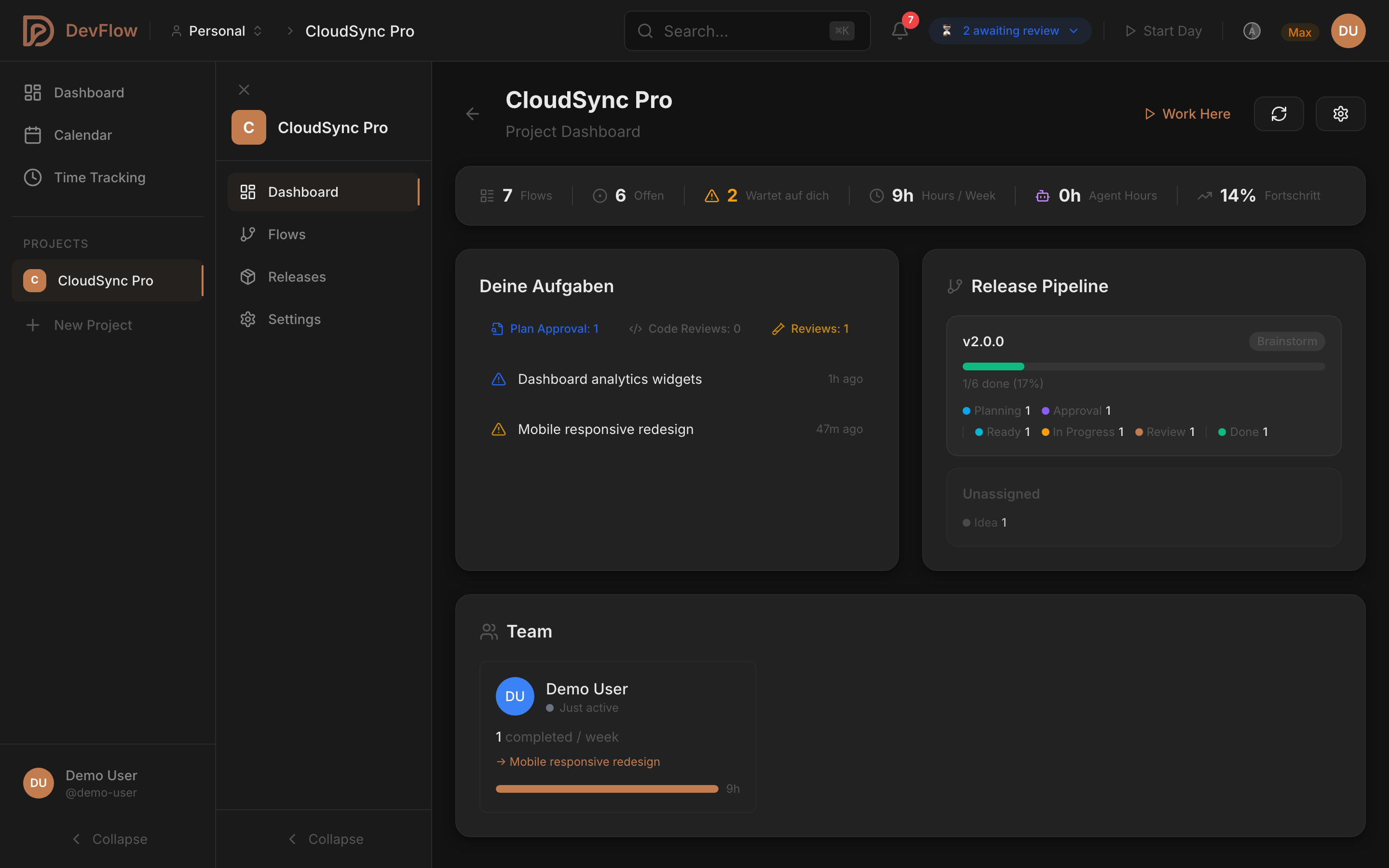
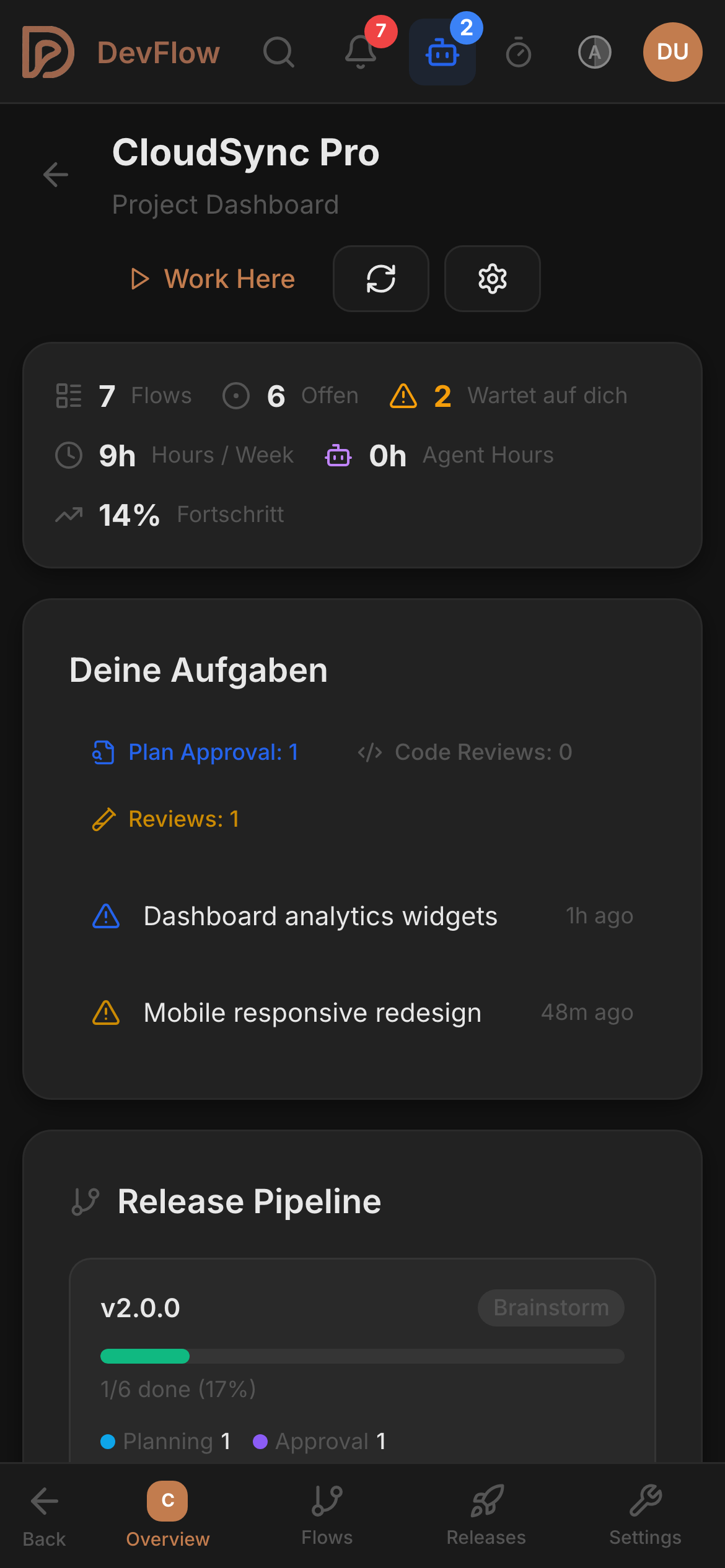
DevFlow brings flows, epics, AI agents and a growing project wiki together in one place.
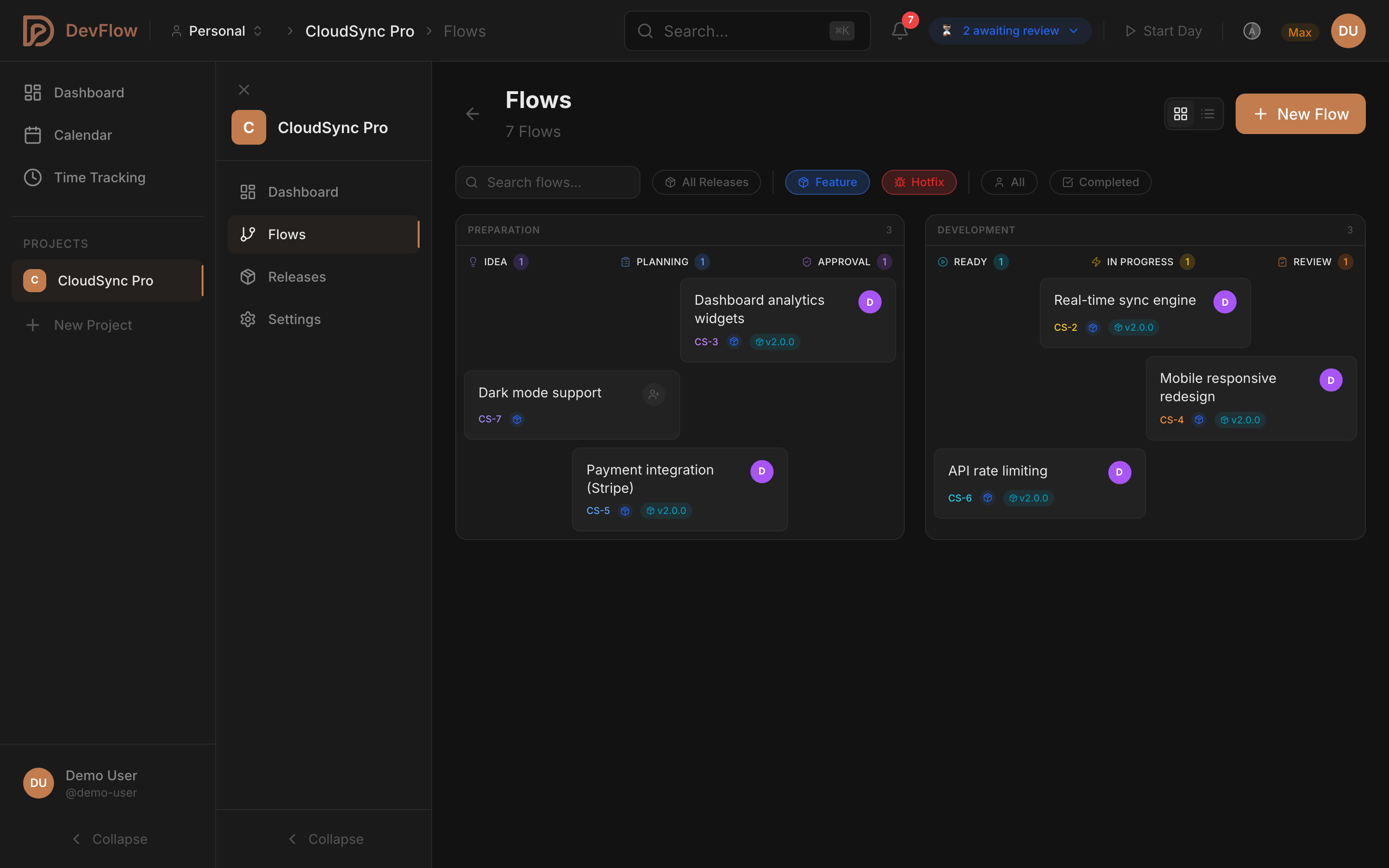
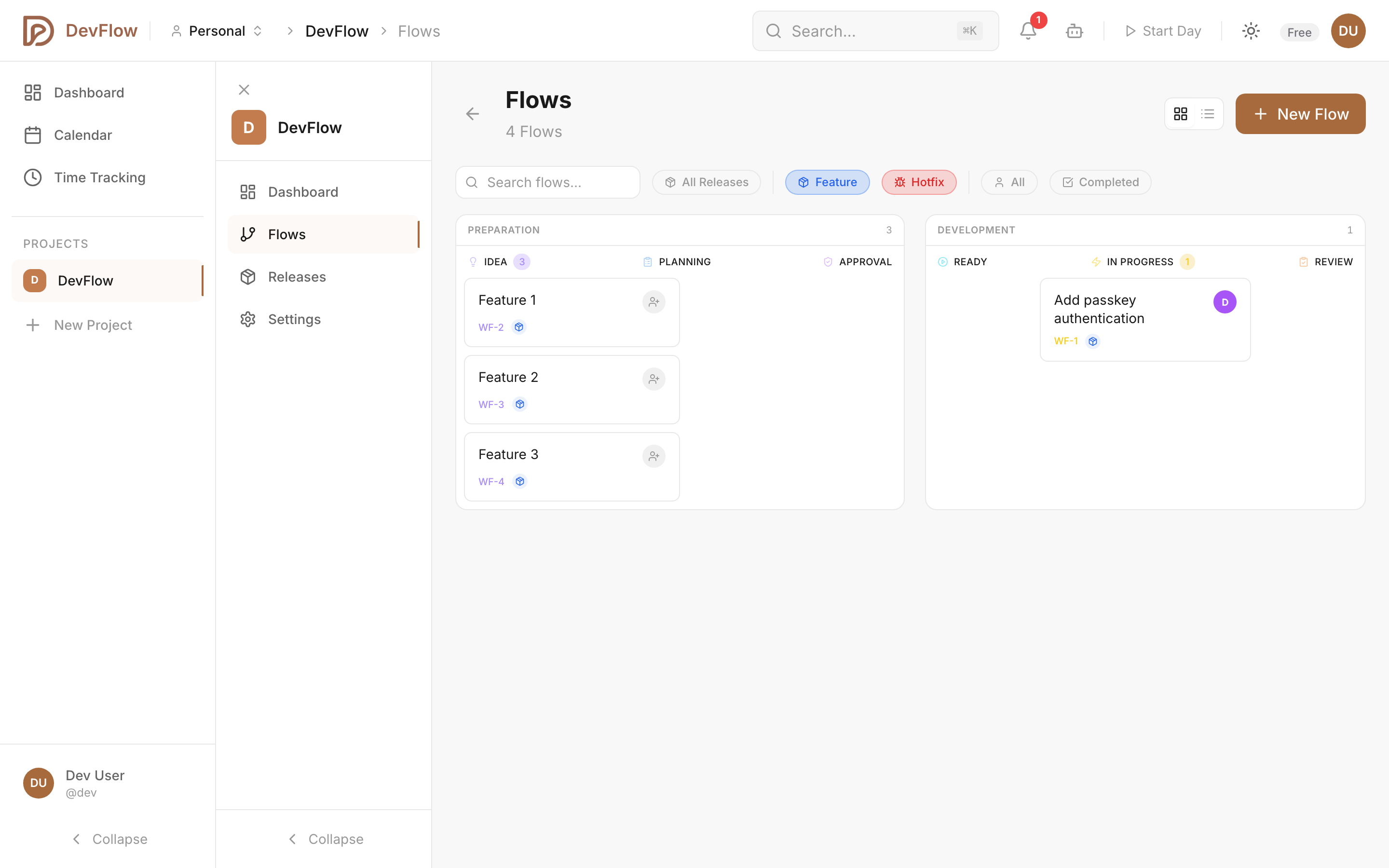
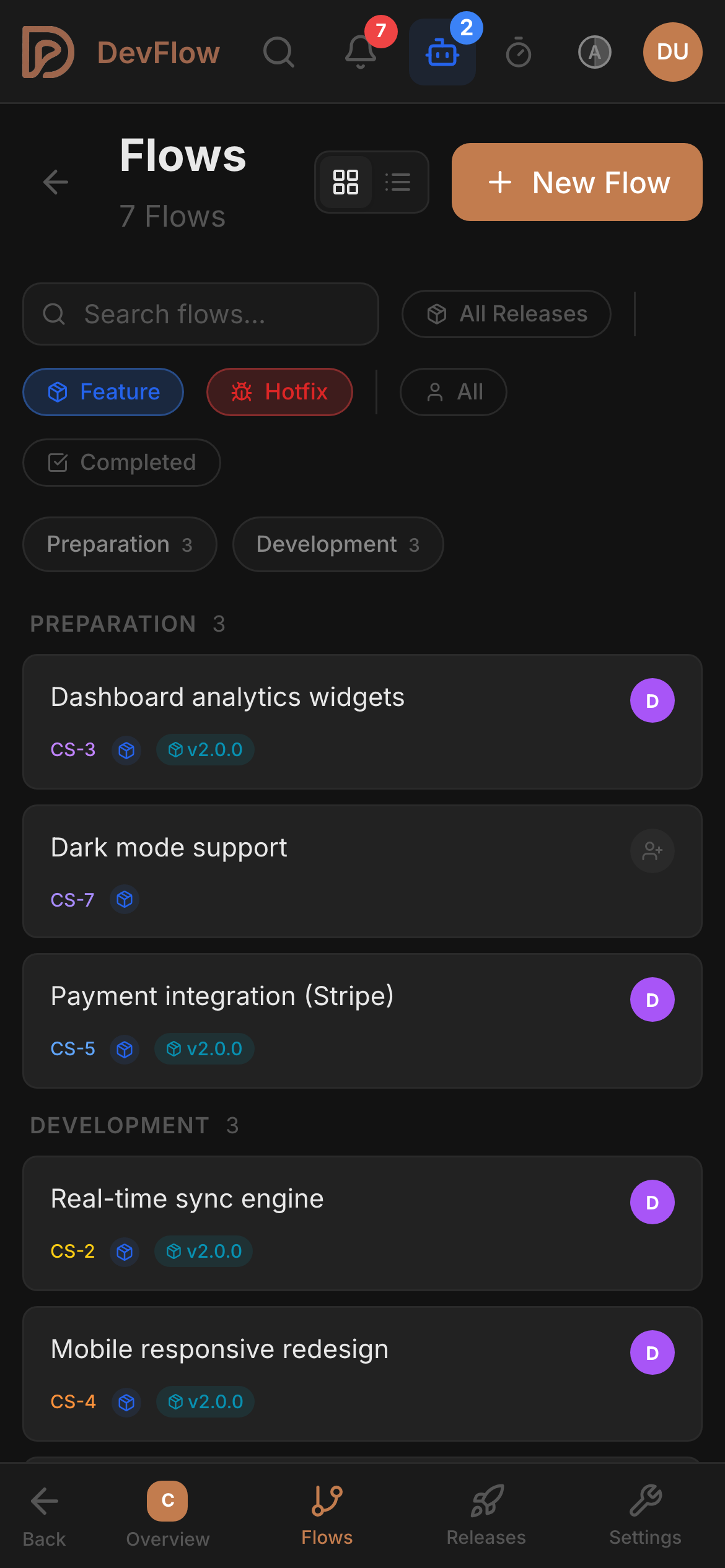
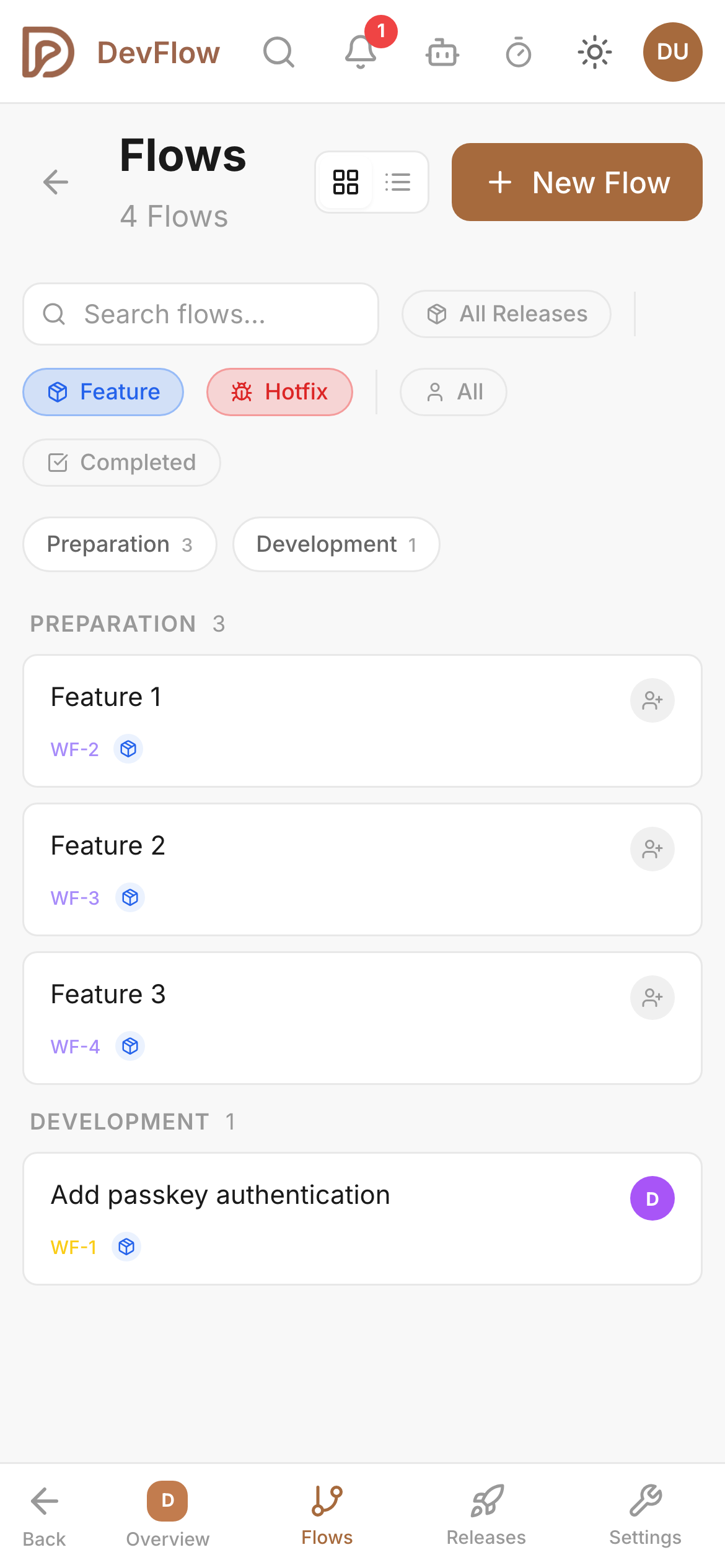
Flows and Epics
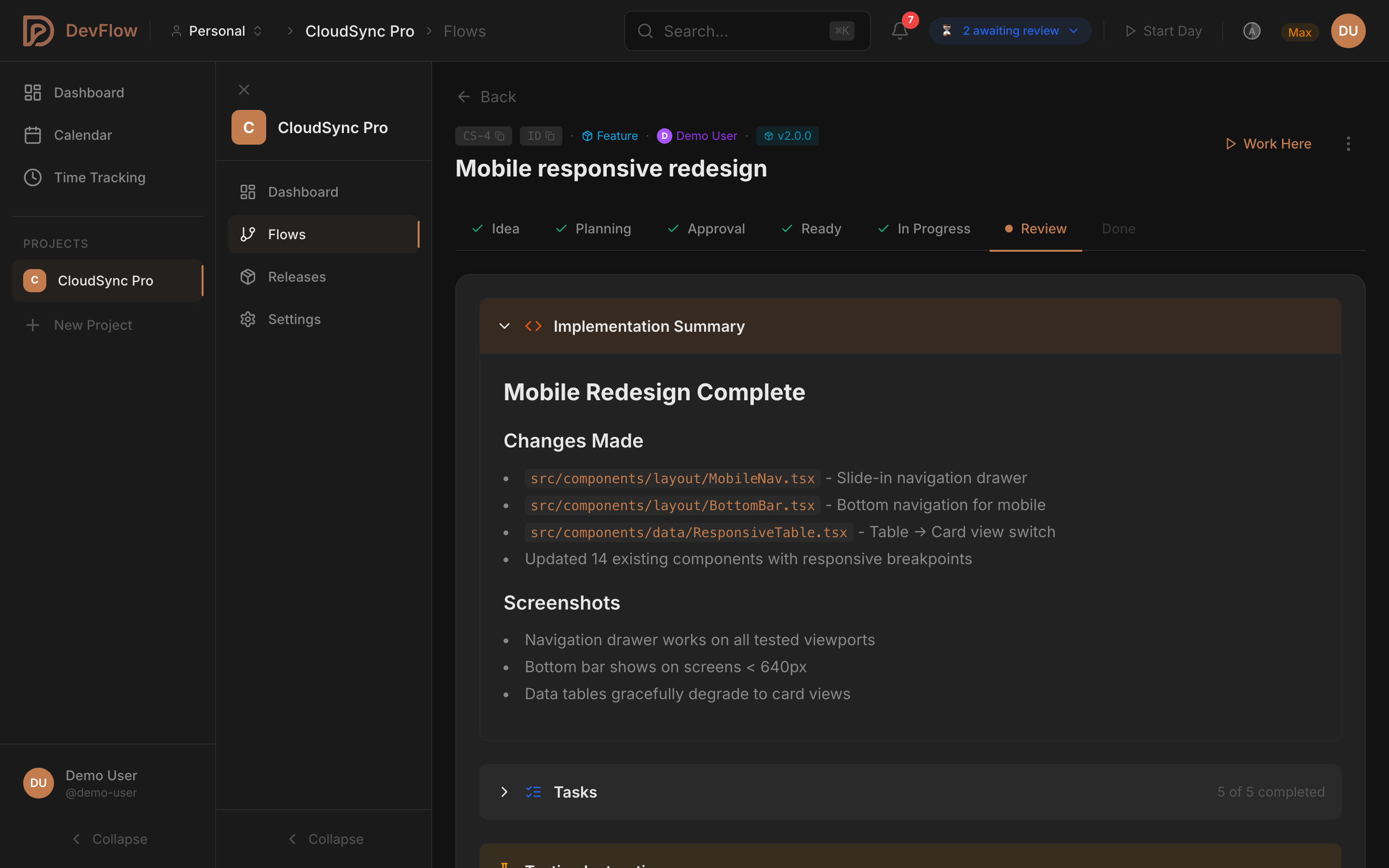
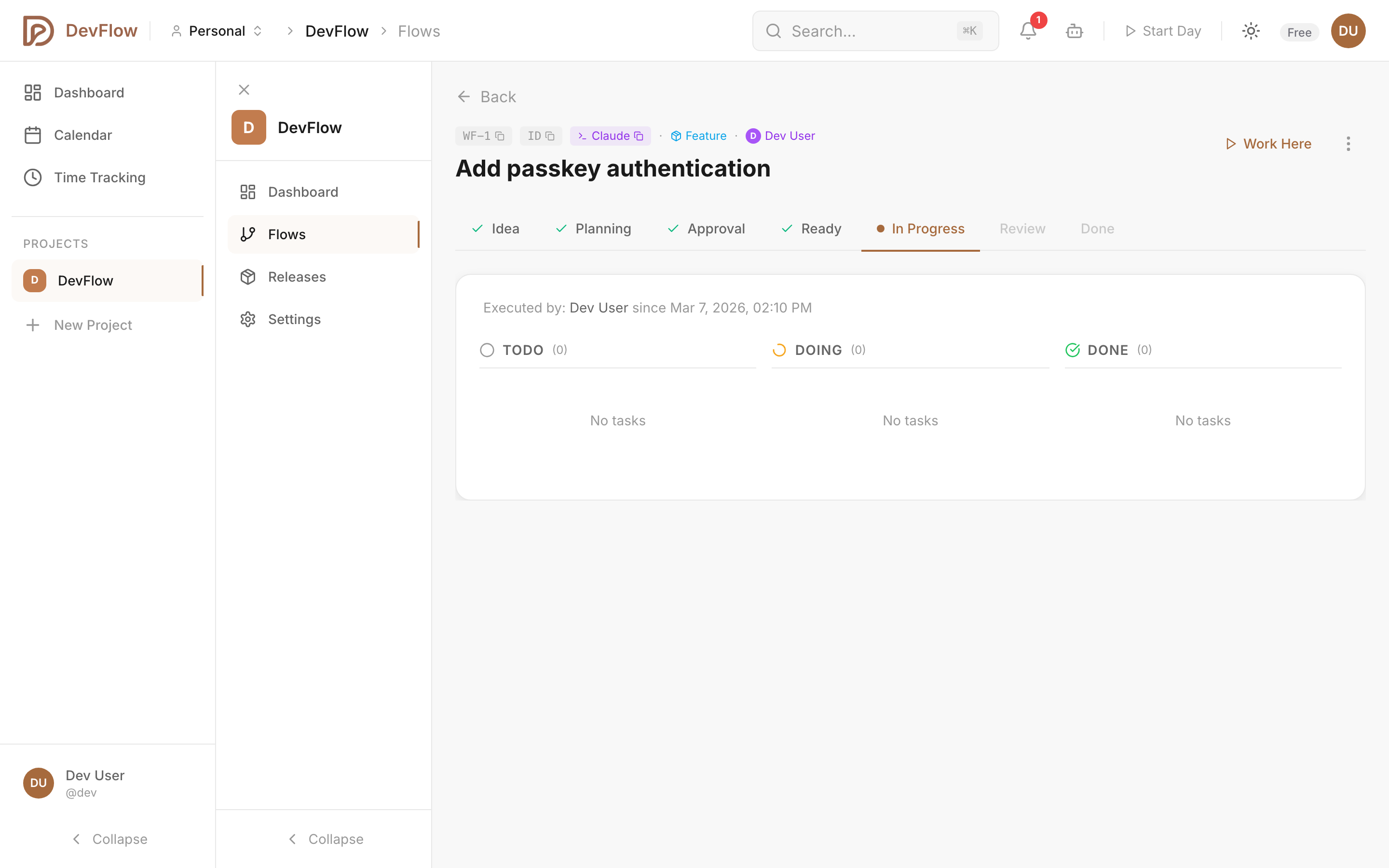
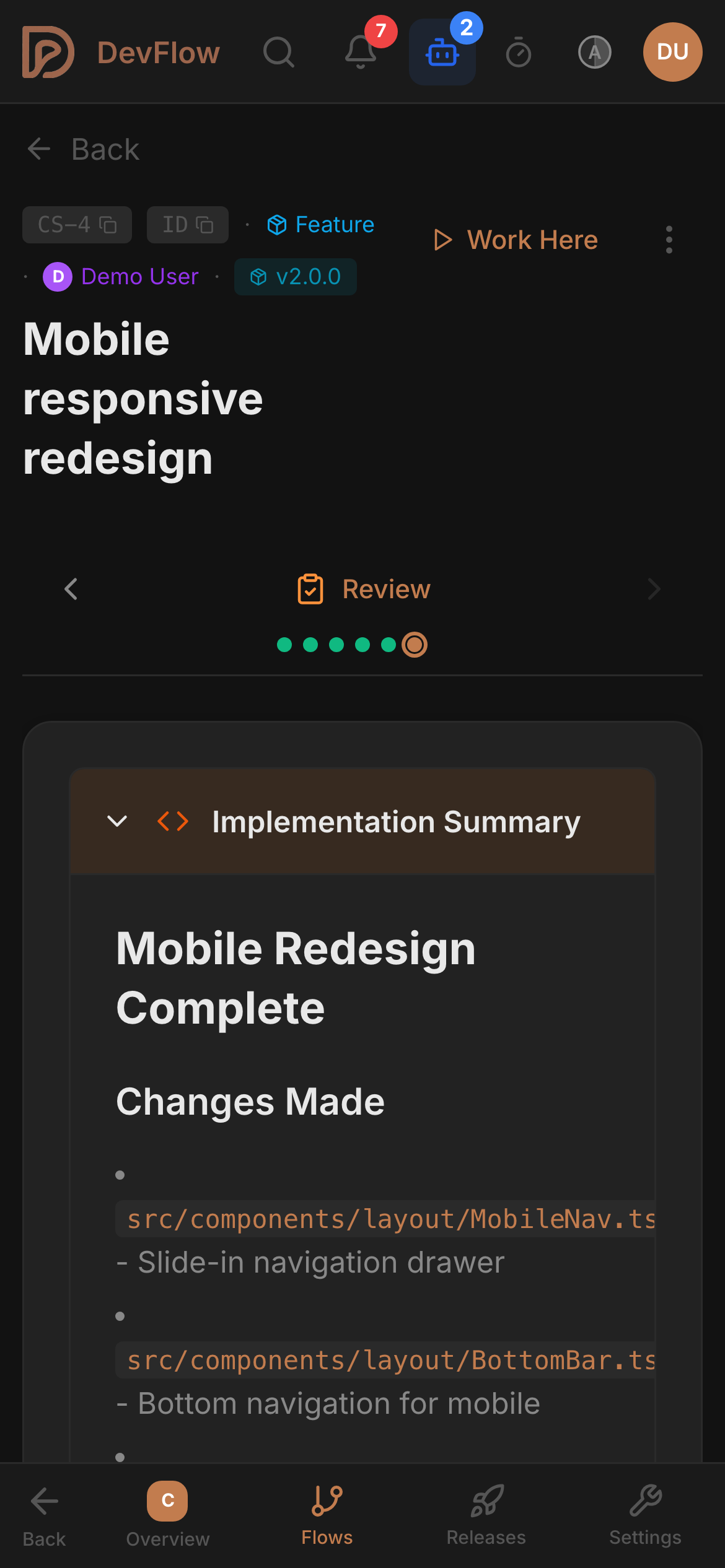
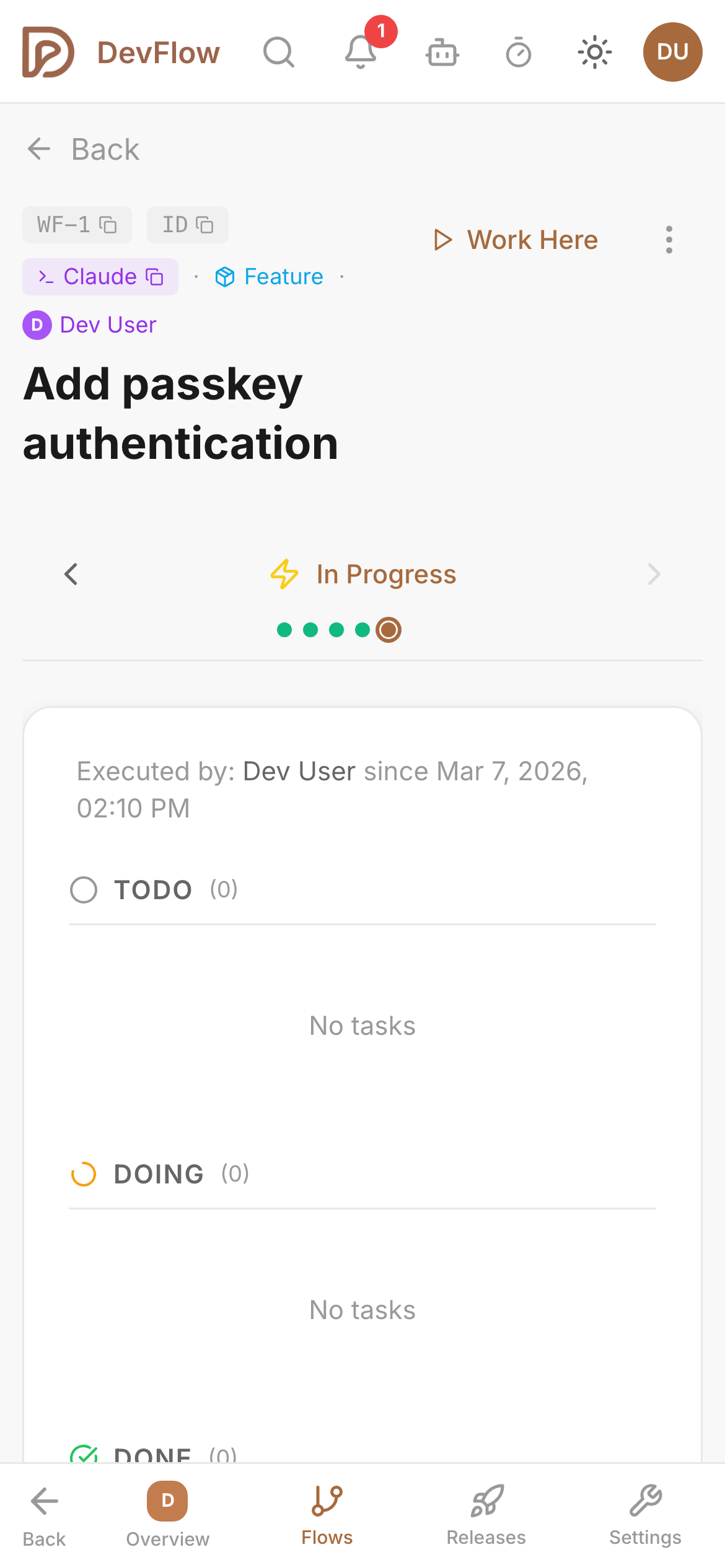
Every piece of work is a flow with a short spec: what, why and the acceptance criteria. Related flows sit under an epic with a one-page spec, so you always see what is being built, how far it is and what comes next.
- Three states: idea → in progress → done
- Epics group flows in order and show their progress
- Each acceptance criterion is proven with a command and its output
- A pull-request status shows when every criterion is proven on the current head
Built for AI coding agents
Your agent works inside DevFlow through the Claude Code plugin or the claude.ai connector. It loads the flow package — epic spec, wiki briefing, review checklists — writes a plan, works test-first and proves each criterion before it closes the flow.
- Claude Code plugin and claude.ai connector over MCP
- Spec, plan and proof live with the flow, not in a chat history
- An independent cross-check judges every criterion against the diff
- No AI keys in DevFlow: the agent runs on your own Claude account
A project wiki that grows
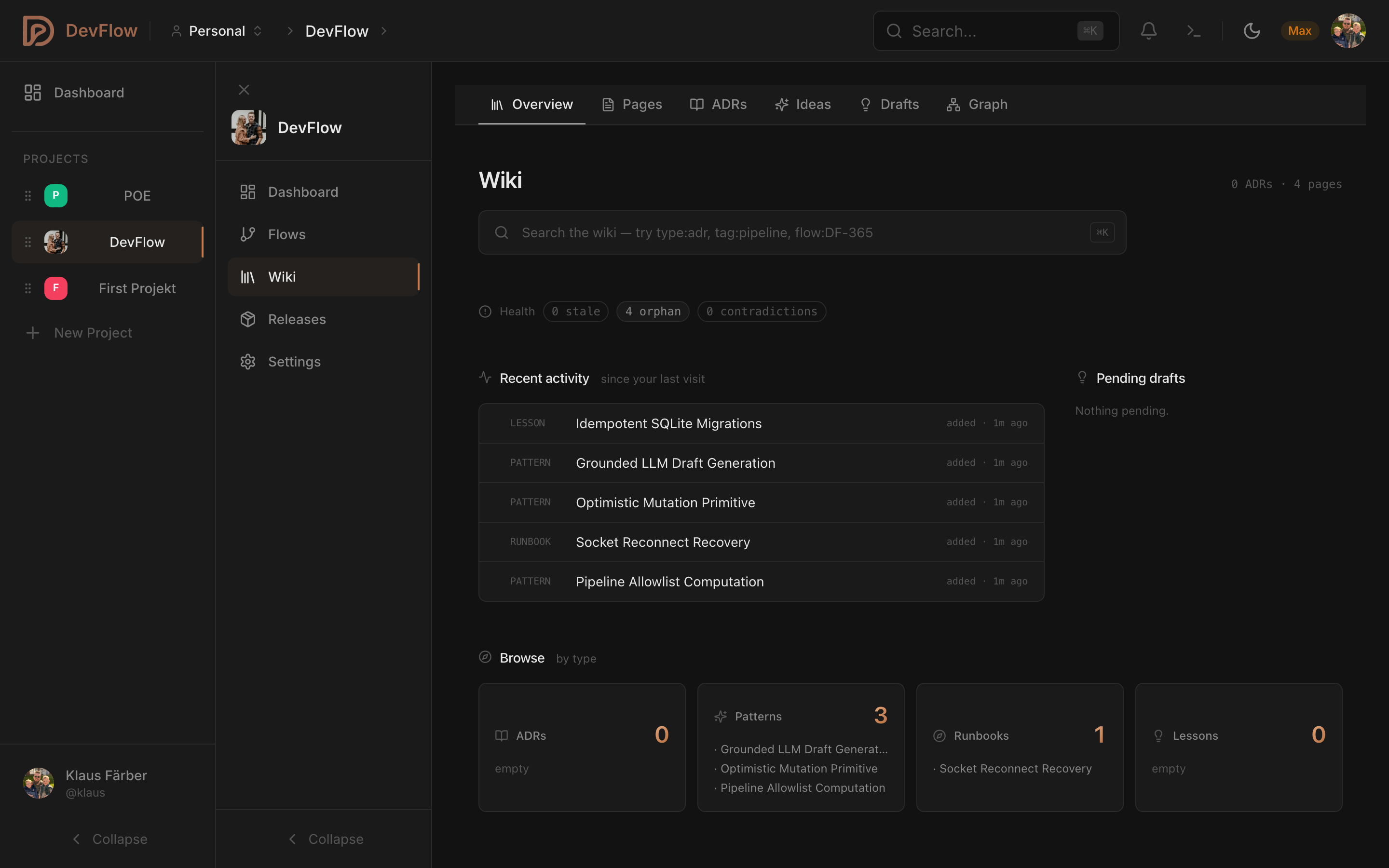
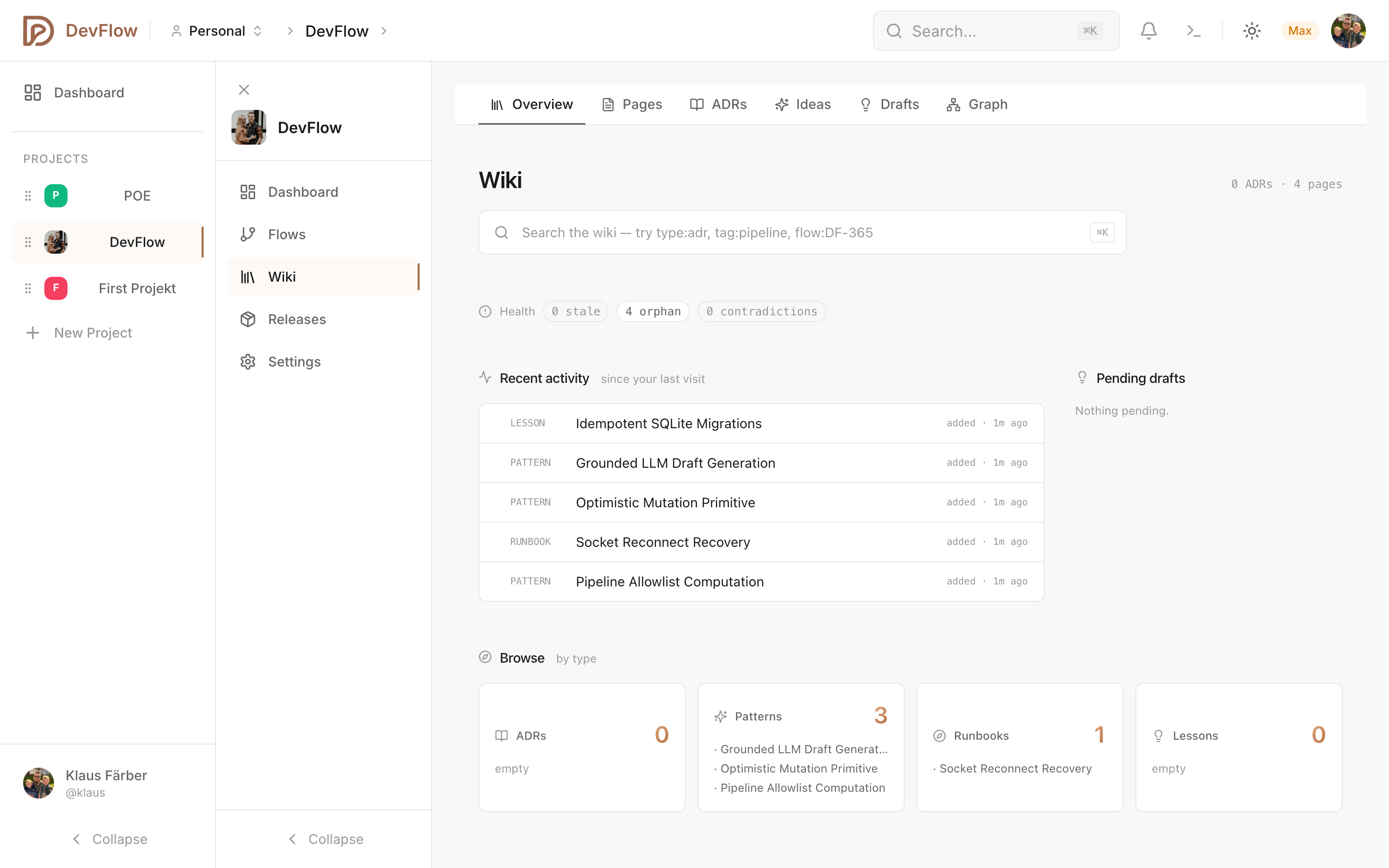
Decisions, patterns and runbooks are Markdown files in your repository. DevFlow indexes them for search, backlinks and lint, and hands the relevant ones to the agent before it plans.
- ADRs, patterns and runbooks as files in .devflow/wiki/
- Planning starts from what the project already knows
- Extend an existing entry before adding a new one
- Search and backlinks across flows, epics and wiki pages
One board, three columns
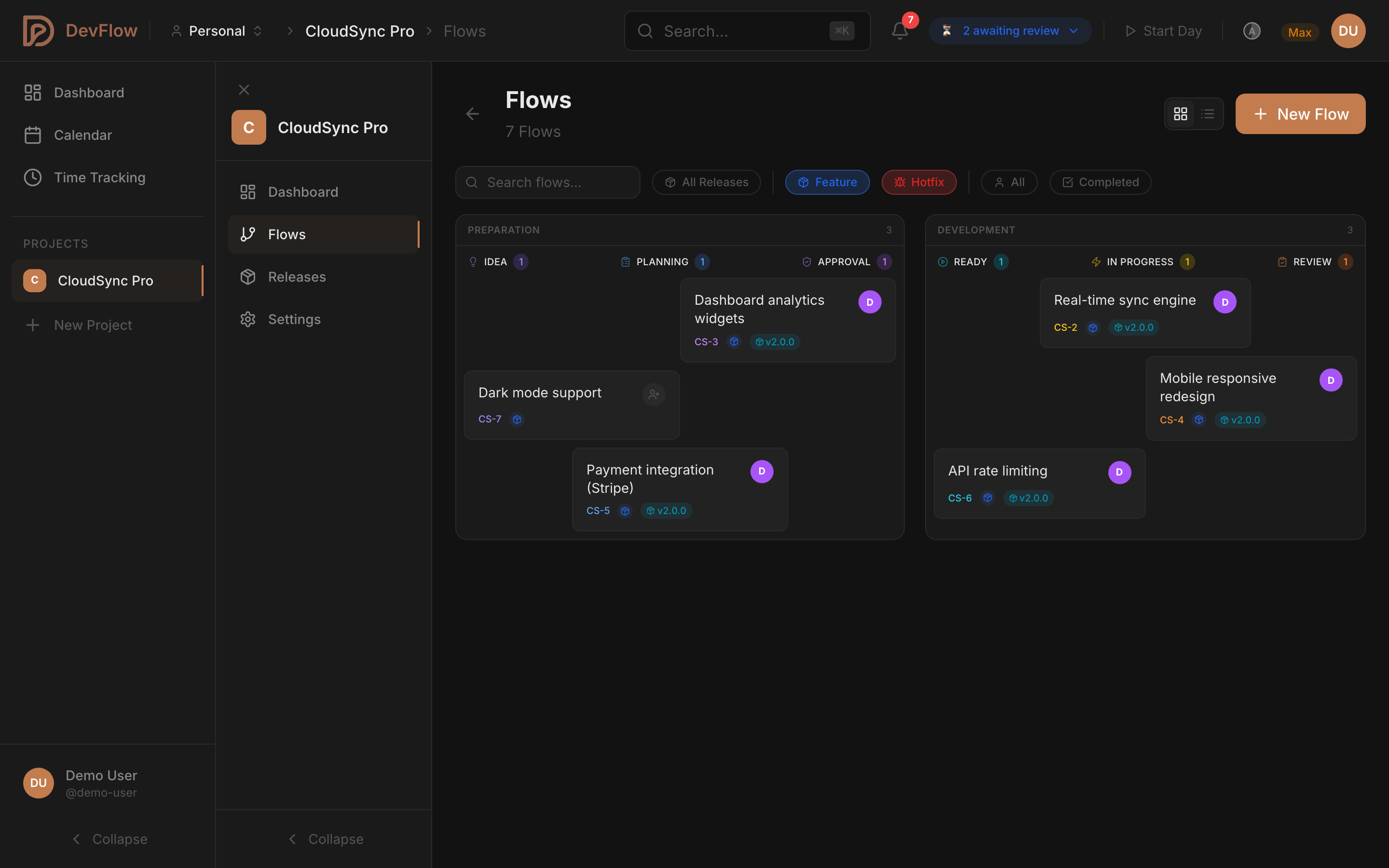
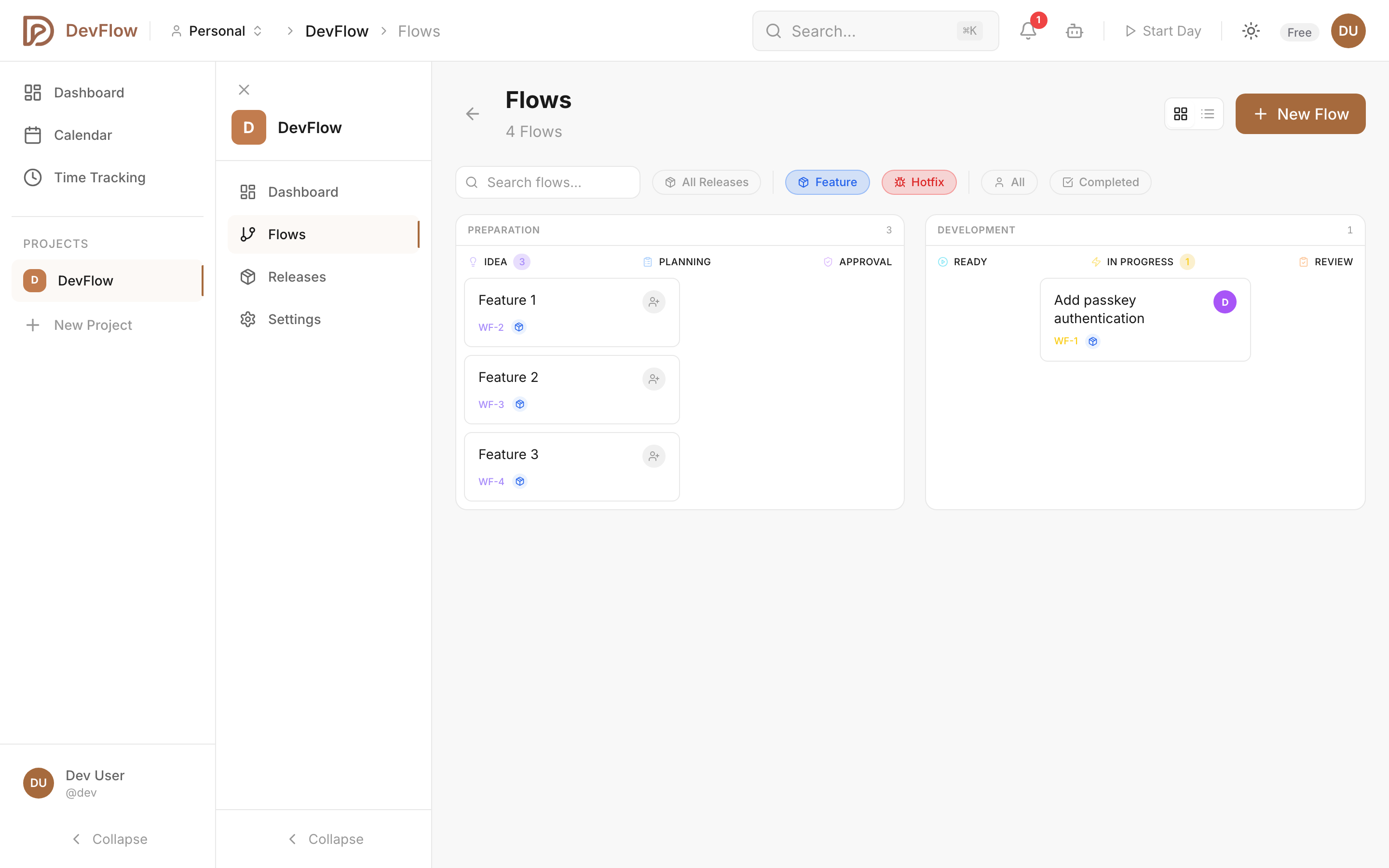
The board shows every flow of a project in three columns. Drag a flow to change its state, filter by epic, and watch changes from agents and teammates arrive live.
- Idea, in progress and done — nothing in between
- Drag and drop to change a flow's state
- Filter by epic or show flows without one
- Live updates while an agent works
Private by design
DevFlow is a private tool. Access is by invitation only, every project has its own roles, and sign-in works without passwords.
- Invitation only — no self-service sign-up
- Project roles: owner, manager, member, viewer
- Passkeys for sign-in, optional trusted devices
- No tracking, no analytics, no advertising
How it works
Three simple steps from idea to production
Write the spec
Describe what you want and why, with a few acceptance criteria. Or let your agent draft it with you.
The agent plans and builds
Your agent loads the epic spec and the wiki, writes a plan and implements test-first in small commits.
Proof, then done
Every acceptance criterion gets a command and its output on the pull request. When all are proven, the flow is done.
Private by design
DevFlow is a private tool. Access is by invitation only. Drop us a line if you'd like to try it.